Diffusion and Contagion
Dad Joke
Interviewer: “Where do you see yourself in 5 years?”
Me: “Listening. I would say listening is my biggest weakness.”
Housekeeping
- Self-assessment reflections due
- In-person feedback; sign up for spot on my calendar by end of next week
- Wisdom or Madness of Crowds simulation - just do on your own
Upcoming Assignments
- Exam on April 16 in class
- Submit two multiple choice or short answer questions by April 6
- Visualization Challenge due next week
Example questions
- What is a “multiplex” (or multidimensional) network?
- A network where there are multiple types of nodes
- A network with high centralization
- A network with a high clustering coefficient
- A network with multiple types of edges
- Give an example of how social capital can be exchanged for economic capital.
Plan for today
- Troubled Lands reflection
- Diffusion and contagion review
- Discussion questions
- R Review ?
Troubled Lands Debrief
- What did you think about while playing?
- How did you feel as you played? Did those feeling change across different versions of the game?
- When do you help others in real life?
Debrief
- Were resources and abilities distributed fairly?
- How should resources be distributed in the real world?
- What role did communication play? How did your group make decisions?
- Did you work to make things equal? Why or why not?
- What kinds of inequality appeared in the game?
Debrief
- Did anyone sanction someone else? Why?
Review Questions
- What are some things that are diffused through a social network?
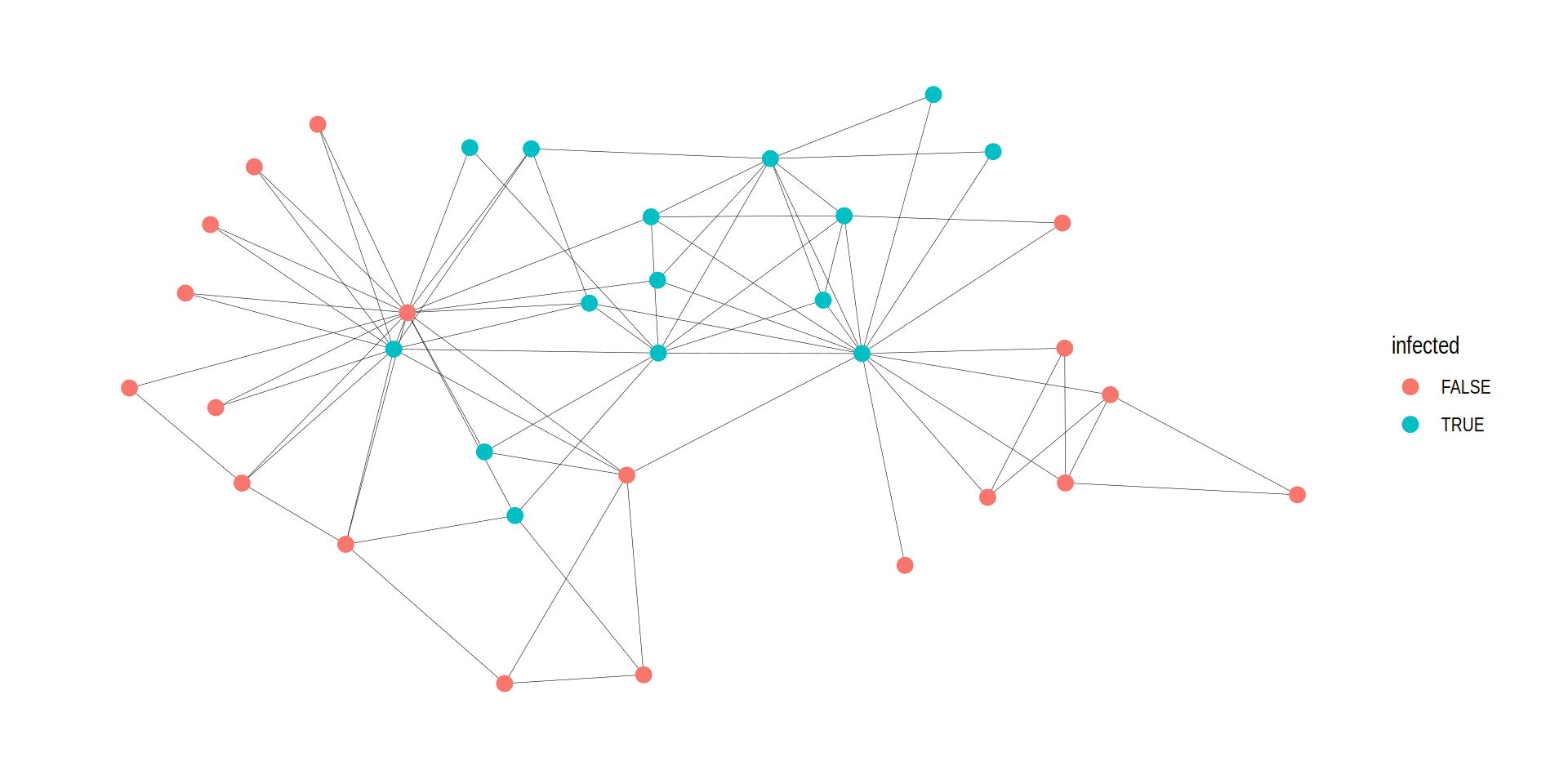
- What is the difference between simple contagion and complex contagion?
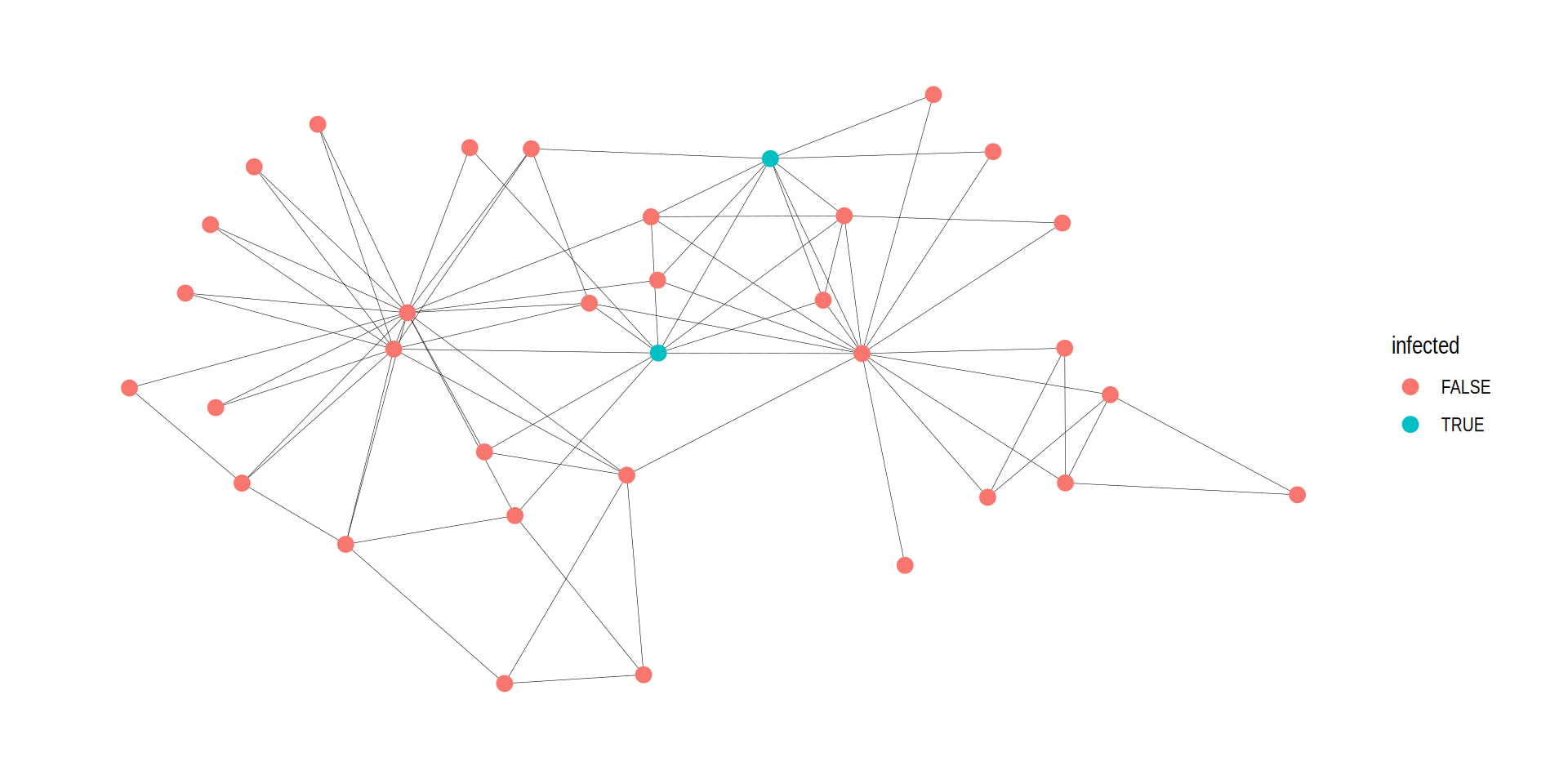
Simple Contagion
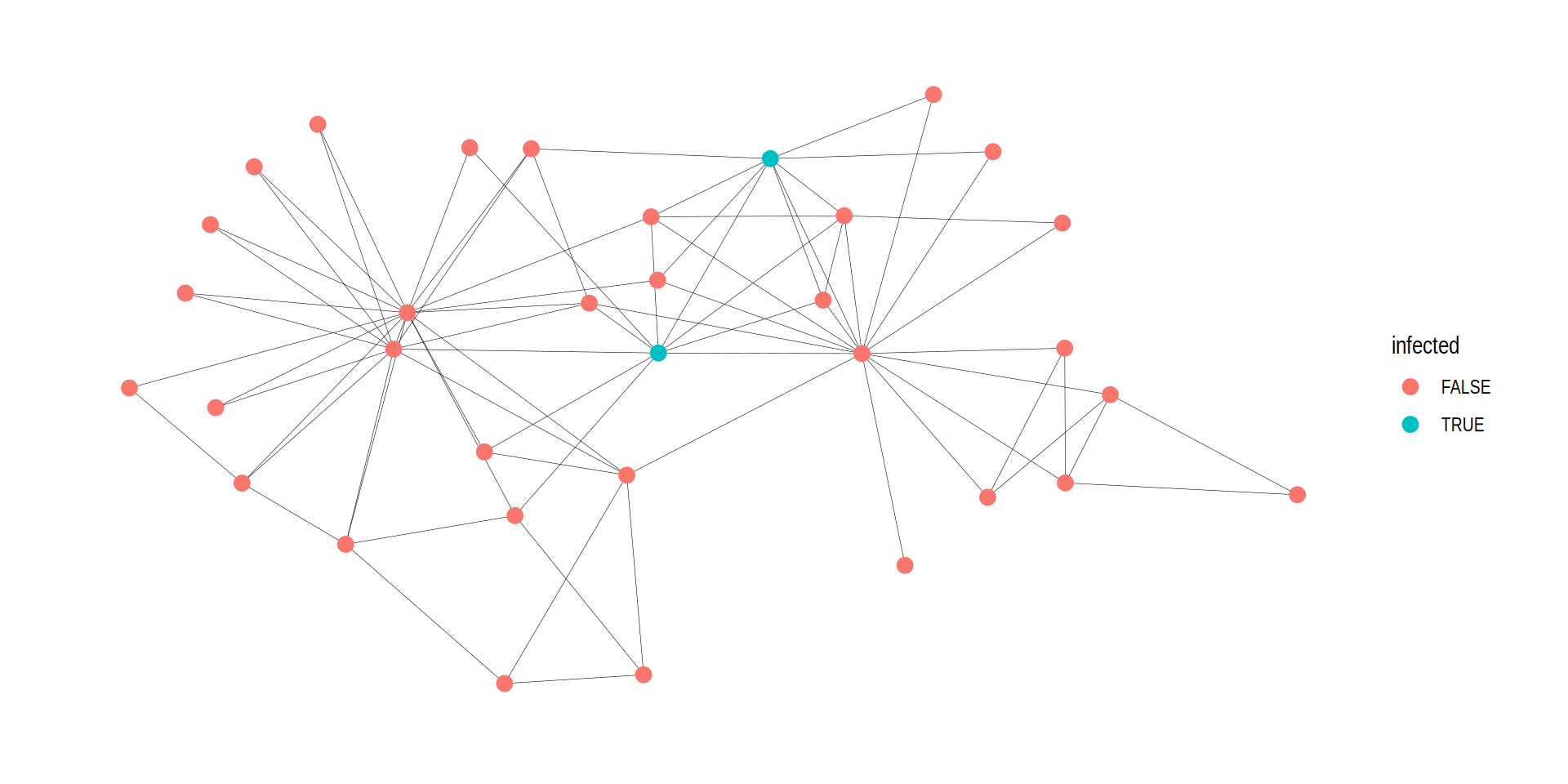
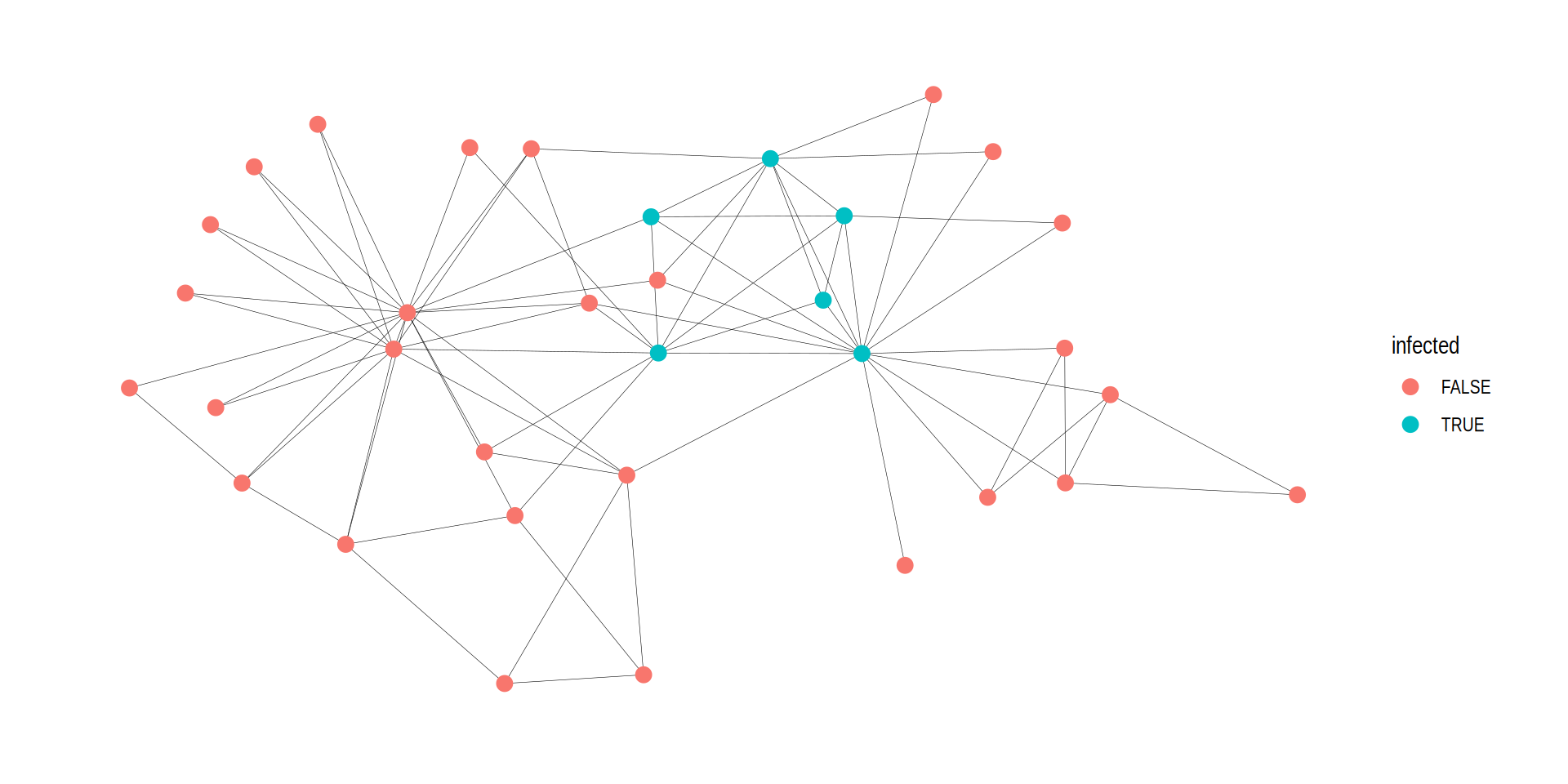
Complex Contagion
Review Questions
- What is an example of something that spreads via simple contagion?
- What is an example of something that spreads via complex contagion?
- What’s an example of when you’ve been influenced?
- How does tie strength relate to contagion?
- What was the argument of the “Special People” chapter?
- Special People Activity
R Review
Wisdom / Madness of Crowds
- How does the majority illusion work?
- How is this related to the spiral of silence?
- Why is it tough for beliefs to spread across bridges?
- What is the role of people who aren’t easily influenced in contagions?
Break
Discussion Questions
- One thing I don’t fully understand is how you can tell in real life whether something is a simple or complex contagion. It seems clear in theory, but in practice I feel like it would be hard to know how many interactions someone actually needs before changing their behavior.
- If social change depends more on network structure and repeated reinforcement than on a few “special people,” why do we still prefer to explain success by focusing on influencers, leaders, or exceptional individuals?
Discussion Questions
- If success of a cultural item comes from luck and a network pushing that item, are things we hold in high regard just random?
- Do you think in social sciences it will ever reach a point where things such as an economic crisis or the next hit movie will become predictable or is there too much randomness involved in society?
Discussion Questions
- In the reading it says that history is not shaped by one “great man” is this universally true or are there exceptions like Alexander the Great, Julius Ceasar, or other individuals that have an importance of a certain magnitude?
- If most trends spread through complex contagion, how can society ensure that reliable information spreads instead of misinformation?